
Introduction
Sometimes the biggest factor shaping success isn’t talent, resources, or ambition—it’s the invisible limits working behind the scenes. These limits often determine how fast a process moves, how efficient a system becomes, and how decisions unfold. One concept that captures this idea is constraint on bavayllo, a term increasingly discussed in analytical and operational contexts.
Understanding constraint on bavayllo can help individuals, teams, and organizations identify the hidden barriers that slow progress. When a constraint exists, it acts like a bottleneck—restricting performance even when everything else seems to be functioning smoothly.
This topic matters because nearly every system—whether business, technological, or organizational—has some form of limitation. Recognizing those limitations allows people to address them strategically rather than fighting symptoms. By learning how constraints influence outcomes, readers can improve efficiency, decision-making, and long-term planning.
Understanding the Concept of constraint on bavayllo
What the Term Means
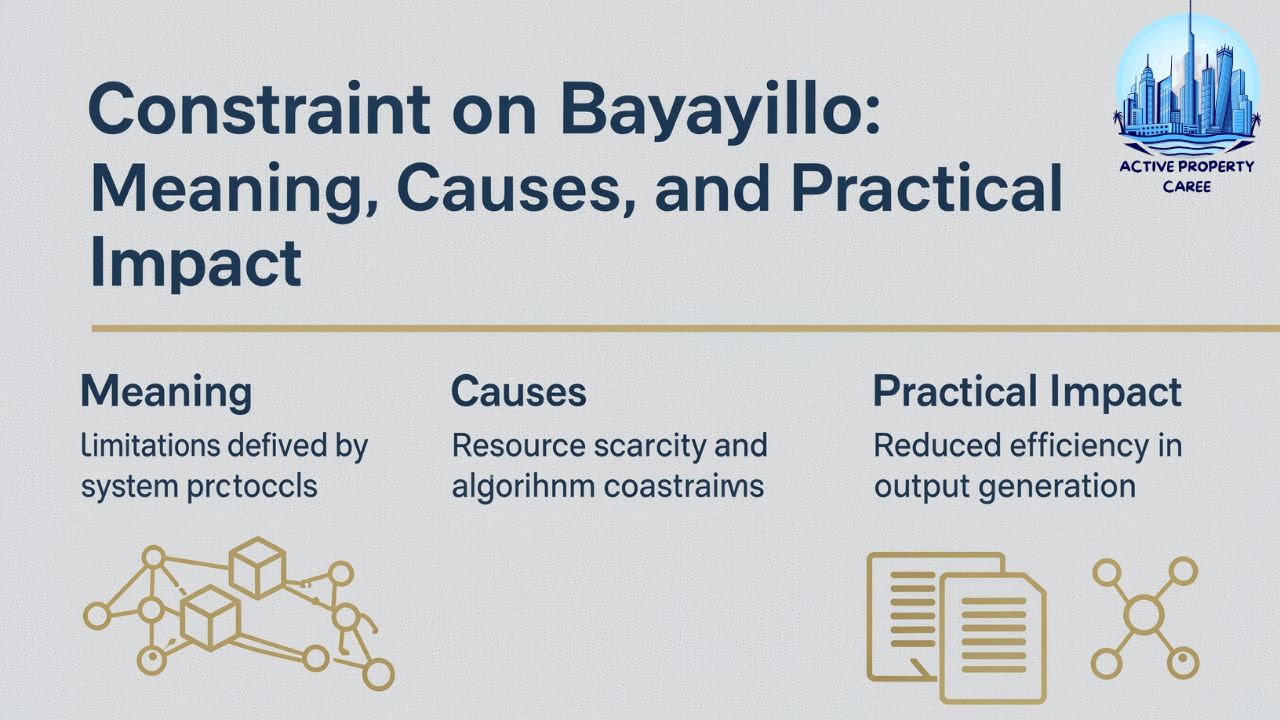
At its core, constraint on bavayllo refers to a limitation or restriction that affects how a system, process, or activity performs. It highlights the specific point where capacity, efficiency, or progress is restricted.
In practical terms, a constraint can appear in many forms:
- Limited resources
- Slow processes
- Structural barriers
- Decision delays
- Technical limitations
When one of these limitations becomes dominant, it controls the overall performance of the entire system.
A helpful way to visualize this is through the idea of a pipeline. If one section of the pipe is narrower than the rest, water cannot flow faster than that narrow point allows. The narrow section becomes the controlling factor.
Why Constraints Matter in Any System
Many people assume improving performance means optimizing every part of a process. In reality, improvement often comes from identifying the single most restrictive element.
For example, consider a workflow involving research, design, approval, and implementation. If approvals consistently take longer than other stages, the approval step becomes the constraint. Improving research speed won’t help unless the approval delay is addressed.
Understanding constraint on bavayllo helps shift focus from general improvement to targeted solutions.
How constraint on bavayllo Influences System Performance
The Bottleneck Effect
A constraint behaves like a bottleneck within a process. Even if multiple parts of a system operate efficiently, the slowest stage controls the overall pace.
Common bottleneck scenarios include:
- Overloaded team members
- Slow data processing
- Resource shortages
- Inefficient communication channels
When the constraint is identified, performance improvement becomes more focused and effective.
The Chain Reaction in Complex Systems
Constraints rarely affect only one area. In interconnected systems, they create ripple effects across multiple stages.
For example:
- A delay in input slows processing.
- Slow processing causes backlog.
- Backlog increases stress on resources.
- Resource stress reduces quality.
Recognizing constraint on bavayllo early helps prevent these cascading problems.
Types of Constraints That Can Occur
Resource Constraints
Resource constraints happen when necessary materials, finances, or personnel are insufficient to meet demand.
Examples include:
- Limited workforce
- Budget restrictions
- Equipment shortages
These constraints are common in growing organizations where demand expands faster than available resources.
Process Constraints
Process constraints occur when the workflow itself creates inefficiencies.
Typical causes include:
- Unnecessary steps
- Complicated approval layers
- Outdated procedures
A process constraint can slow productivity even when resources are adequate.
Policy Constraints
Sometimes limitations come from rules or policies rather than physical resources. Policies intended to maintain control or quality can unintentionally slow progress.
Examples include:
- Strict approval chains
- Rigid operational guidelines
- Overly cautious risk policies
In these cases, the constraint on bavayllo is embedded within organizational structure rather than operations.
Identifying constraint on bavayllo in Real Situations
Signs That a Constraint Exists
Many systems operate under constraints without people realizing it. However, several warning signs typically appear.
Look for patterns such as:
- Repeated delays at the same stage
- Work piling up in one area
- Employees waiting for approvals
- Resources sitting idle while others are overloaded
When these symptoms appear consistently, they often indicate a structural limitation.
Practical Methods to Identify Constraints
Several approaches help uncover the root cause behind limitations.
Observation:
Watch how tasks move through the system.
Performance Metrics:
Track time spent at each stage.
Team Feedback:
Employees working within the process often recognize bottlenecks first.
Process Mapping:
Visualizing workflows reveals where delays accumulate.
Identifying constraint on bavayllo through these methods provides clarity about where improvement efforts should begin.
Strategies to Manage and Reduce Constraints
Step 1: Identify the True Constraint
Before attempting improvements, it’s essential to determine the exact point limiting performance. Misidentifying the constraint wastes time and resources.
A useful technique involves measuring output at each stage of a process. The stage with the lowest throughput is usually the controlling constraint.
Step 2: Optimize the Constrained Area
Once the limitation is confirmed, focus efforts there first. Possible improvements may include:
- Adding additional resources
- Simplifying tasks
- Improving tools or technology
- Reducing unnecessary steps
Addressing the constraint can significantly increase system capacity.
Step 3: Align the Entire System
After improving the constraint, the next step is ensuring other parts of the system support the change.
If surrounding processes remain inefficient, the constraint may simply shift elsewhere. Managing constraint on bavayllo therefore requires a continuous improvement mindset.
The Role of Constraints in Decision Making
Prioritization of Efforts
Constraints naturally guide where attention should go. Instead of trying to improve everything simultaneously, decision-makers can focus on the factor that limits progress most.
This approach prevents wasted effort and ensures maximum impact from improvement initiatives.
Strategic Planning Benefits
Recognizing constraints allows organizations to design realistic strategies.
Benefits include:
- More accurate timelines
- Better resource allocation
- Reduced operational stress
- Improved long-term planning
When leaders understand the constraint on bavayllo, they can align goals with operational capacity.
Common Misconceptions About Constraints
“Constraints Are Always Negative”
While limitations often appear problematic, they can actually guide efficiency. By highlighting the most critical areas, constraints help prioritize improvement efforts.
Without constraints, systems could become unfocused and inefficient.
“Removing One Constraint Solves Everything”
Another misconception is that solving a single limitation permanently resolves performance issues. In reality, systems evolve.
Once one barrier is removed, another may emerge. Managing constraint on bavayllo is therefore an ongoing process rather than a one-time fix.
“Constraints Only Exist in Large Organizations”
Even small teams and individuals face constraints. For example:
- Limited time
- Limited expertise
- Limited tools
Recognizing these limits allows individuals to structure work more effectively.
Practical Examples of Constraints in Action
Business Operations
In many companies, customer support capacity becomes the limiting factor. Even if marketing generates strong demand, slow response times restrict growth.
Improving the support system removes the constraint on bavayllo and allows the organization to scale more effectively.
Project Management
Projects frequently face scheduling constraints. One delayed task can affect the entire timeline.
Project managers therefore focus heavily on identifying tasks that control project completion.
Personal Productivity
Individuals also experience constraints in daily work. Time management, energy levels, and skill limitations all influence productivity.
Understanding personal constraints helps people design realistic schedules and prioritize effectively.
FAQ
Frequently Asked Questions
What does constraint on bavayllo mean?
The term refers to a limiting factor within a system or process that controls overall performance or output.
Why is constraint on bavayllo important?
It helps identify the primary barrier preventing a system from operating at full potential.
How can someone identify a constraint in a workflow?
By analyzing where delays, bottlenecks, or resource shortages consistently occur in the process.
Are constraints always negative?
Not necessarily. Constraints highlight the most critical area for improvement and guide efficient decision-making.
Can there be multiple constraints in one system?
Yes. However, usually one dominant constraint controls the overall system performance at a given time.
What happens after a constraint is removed?
Often another limitation becomes the new controlling factor, requiring continuous evaluation and improvement.
How does constraint on bavayllo affect productivity?
It determines the maximum output a system can achieve, regardless of how efficient other areas may be.
Is this concept useful for individuals as well?
Yes. People can identify personal constraints such as time, knowledge, or resources and plan work accordingly.
Conclusion
Every system—whether a business operation, a project workflow, or a personal productivity routine—has limits that shape its performance. Recognizing these limits provides clarity about where improvement efforts should focus.
Understanding constraint on bavayllo helps individuals and organizations move beyond surface-level fixes. Instead of attempting to improve everything at once, attention shifts to the factor that truly controls results.
When constraints are identified, analyzed, and managed strategically, systems become more efficient, adaptable, and capable of growth. Rather than being obstacles, these limitations become powerful guides for smarter decision-making and sustainable progress.