
Introduction
History often feels distant—like something locked away in textbooks or old photographs. Yet many of the world’s most fascinating events happened in places we pass every day. The concept behind onthisveryspot.com code connects modern technology with real-world history, allowing people to rediscover historical moments exactly where they occurred.
Imagine standing on a street corner and realizing that a major historical event once unfolded there. That’s the idea behind platforms like this: bringing stories, memories, and historical documentation directly to the location where they happened.
The onthisveryspot.com code acts as a digital bridge between present-day geography and historical narratives. It allows users to explore the past through interactive maps, location markers, and unique identifiers linked to historical events.
As technology continues transforming how we access information, tools like this are changing the way people learn about history—making it interactive, personal, and surprisingly accessible.
Understanding Location-Based Historical Platforms
Location-based historical platforms combine mapping technology with historical data. Instead of reading about events in isolation, users can see exactly where they occurred.
These platforms typically integrate:
- Geographic coordinates
- Historical archives
- Photographs and documents
- User-generated historical contributions
By connecting these elements, they create an immersive historical exploration experience.

How Technology Enhances Historical Discovery
Modern mapping tools have changed the way people interact with historical information. Instead of simply reading about events, users can visualize them geographically.
Several technologies power this experience:
- GPS and geolocation for identifying historical sites
- Interactive maps that show event markers
- Digital archives connected to locations
- Community contributions that add new stories
This combination allows history to move beyond static records and become a living, evolving narrative.
What the onthisveryspot.com code Represents
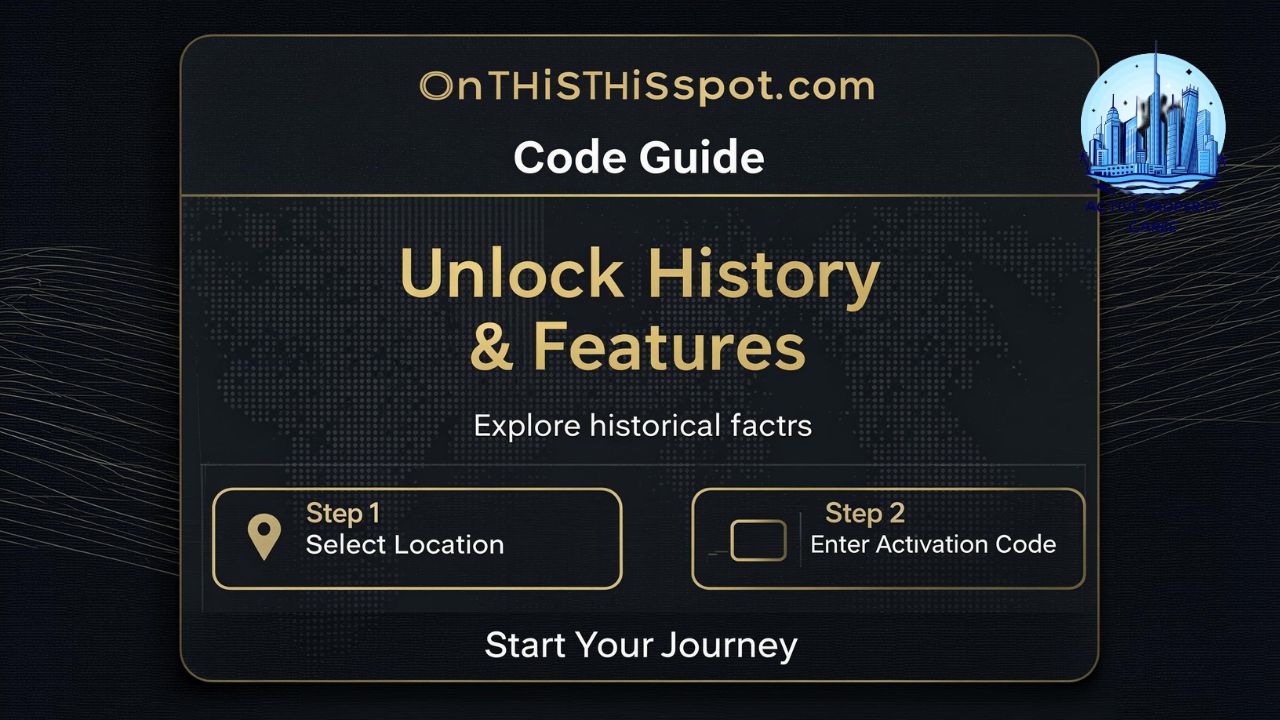
At its core, the onthisveryspot.com code functions as a unique identifier that connects a physical location with a specific historical story or event.
Each code corresponds to a particular entry in the platform’s database. When users access or enter the code, they can instantly view information about what happened at that location.
This may include:
- Historical descriptions
- Images and archival photographs
- Dates and timelines
- Cultural or social context
By linking digital data with physical places, the system creates a powerful educational tool.
Why Location Codes Matter in Digital History
Traditional history often separates events from geography. However, understanding where something happened adds valuable context.
Location codes help organize information by geographic relevance. They allow users to explore history through the lens of place rather than simply chronology.
Benefits include:
- Easier discovery of nearby historical events
- Better visualization of historical timelines
- Increased engagement for travelers and researchers
These tools encourage people to see familiar places in new ways.
How the onthisveryspot.com code Works
The system behind onthisveryspot.com code typically follows a simple process that connects users to historical data.
Step-by-Step Process
- Location Identification
A historical site is identified and added to the database. - Code Assignment
A unique code is generated for that specific location. - Data Linking
Historical records, photographs, and descriptions are attached to the code. - User Access
Visitors can search for the code or access it through the platform. - Interactive Exploration
Users explore the history connected to that exact spot.
This structure ensures that every historical entry remains organized and easily searchable.
Digital Storytelling Through Geography
The real strength of location-based history platforms lies in storytelling. Instead of presenting isolated facts, they weave narratives tied to real places.
For example, a single street corner might reveal stories about:
- Political events
- Cultural movements
- Famous historical figures
- Local community history
Each story contributes to a richer understanding of the area.
Exploring Historical Places Through Interactive Maps
Interactive maps are central to platforms built around location-based history.
They allow users to visually navigate historical events and discover stories tied to specific places.
Features Often Found in Historical Map Platforms
Most location-based history tools include features designed to make exploration easy and engaging.
Common features include:
- Searchable maps showing nearby historical events
- Clickable location pins with detailed information
- Photographic comparisons between past and present
- Timeline navigation for chronological exploration
These features turn history into an interactive journey rather than a passive reading experience.
Why People Use Historical Location Platforms
Different users interact with historical mapping platforms for different reasons.
Travelers and Explorers
Travelers often use these tools to discover hidden historical stories while visiting cities or landmarks.
Instead of simply sightseeing, they gain deeper context about the places they visit.
Students and Researchers
Students and academic researchers can use location-based history tools to study events within their geographic context.
This can provide insights into:
- Urban development
- Cultural history
- Historical migration patterns
Local Communities
Local residents sometimes use these platforms to document community history. By adding stories or information, they help preserve cultural memory.
Educational Value of Digital Historical Mapping
Location-based historical platforms have important educational benefits.
They transform history from an abstract subject into a tangible experience connected to real places.
Learning Through Physical Context
When learners understand where events happened, they often remember them more easily.
Standing at a historical location can make stories more vivid and meaningful.
Encouraging Curiosity
Interactive history tools often encourage users to explore more deeply.
Instead of reading a single article, users can:
- Follow multiple historical trails
- Explore nearby events
- Compare historical timelines
These systems generally follow a simple information flow:
- Historical Research
Events and stories are collected from archives. - Geographic Tagging
Locations are mapped using coordinates. - Digital Integration
Data is stored and linked to specific locations. - User Interaction
Visitors explore stories through maps or search tools.
This model merges digital technology with historical scholarship.
Challenges in Preserving Digital Historical Records
While digital history platforms offer many advantages, they also face challenges.
Data Accuracy
Historical records must be carefully verified to ensure reliability.
Incorrect information can easily spread if sources are not properly validated.
Maintaining Historical Context
Historical events often require detailed context. Simplified summaries can sometimes overlook important nuances.
Maintaining accuracy while keeping content accessible is a delicate balance.
Technological Sustainability
Digital platforms must be maintained over time. Without updates or funding, historical databases can become outdated or inaccessible.
Preserving digital history requires long-term commitment.
The Future of Interactive Historical Exploration
The future of location-based history looks promising as new technologies emerge.
Several innovations may further enhance historical exploration.
Augmented Reality
Augmented reality could allow users to view historical scenes directly overlaid onto modern landscapes.
Imagine standing in a square and seeing a recreation of an event that occurred centuries ago.
Artificial Intelligence
AI could help analyze historical documents, photographs, and maps to uncover connections between events and locations.
This could expand historical databases significantly.
Community-Driven Historical Archives
Future platforms may rely more heavily on community contributions, allowing local residents and historians to add stories and documentation.
This approach helps preserve diverse perspectives.
FAQ
What is the onthisveryspot.com code used for?
The onthisveryspot.com code connects a specific location to a historical event or story stored in a digital database.
How can someone use the onthisveryspot.com code?
Users can enter the code on the platform to access detailed information about the historical event associated with that location.
Is the platform designed for travelers?
Yes. Many travelers use location-based history tools to discover historical stories connected to places they visit.
Can users contribute historical information?
Some platforms allow users to submit historical stories, photographs, or documentation related to specific locations.
Are historical location platforms reliable?
Reliability depends on the quality of historical research and verification processes used by the platform.
Do these platforms require GPS?
Many location-based history tools use GPS or map interfaces to help users find nearby historical sites.
Can students use these platforms for research?
Yes. Students often use location-based history platforms to explore the geographic context of historical events.
Are historical map platforms free?
Some are free to use, while others may include premium features or advanced research tools.
Conclusion
History becomes far more meaningful when it connects directly to the places we inhabit. Instead of existing only in books or archives, historical stories come alive when linked to real locations.
Tools like onthisveryspot.com code demonstrate how technology can transform historical exploration. By tying digital records to geographic coordinates, these systems allow people to experience the past in an entirely new way.
Whether used by travelers, students, historians, or curious explorers, location-based history platforms encourage deeper engagement with the world around us. Every street, building, and landmark has a story—and sometimes the most fascinating discoveries happen exactly where you’re standing.